Door locks and hardware are critical for security and function. They work hard, exposed to temperature changes and constant use. Regular maintenance ensures they operate smoothly, function reliably, and last for years. Here’s what every homeowner should know.
Why Maintain Locks and Hardware
- Security: Working locks are essential for safety
- Reliability: Prevent lock failures when needed most
- Extends lifespan: Simple maintenance adds years
- Saves money: Maintenance is cheaper than replacement
- Smooth operation: Eliminates sticking and binding
- Increases property value: Well-maintained security increases value
Common Lock and Hardware Problems
Sticky Locks:
- Usually caused by dirt or misalignment
- Can prevent locking
- Requires prompt attention
Broken Hinges:
- Causes doors to hang unevenly
- May prevent closing or opening
- Safety concern
Loose Hardware:
- Fasteners become loose from use
- Causes rattling and squeaking
- Increases wear on components
Rusted Hardware:
- More common in exterior hardware
- Decreases function and appearance
- Can be prevented with maintenance
Lock Cylinder Problems:
- Key won’t turn smoothly
- Lock won’t catch
- May require replacement
Lubricants for Locks and Hardware
What to use:
- Silicone spray lubricant (best choice)
- PTFE lubricant
- Graphite powder (for locks specifically)
- Light machine oil (less ideal but works)
What NOT to use:
- WD-40 (attracts dirt to locks)
- Heavy grease (accumulates dirt)
- Oil in locks (gunks up)
- Water (causes rust)
Why lubricant matters:
- Reduces friction
- Protects against rust
- Improves operation
- Extends hardware life
Lock Maintenance
General Lock Care
Monthly:
- Test lock operation
- Ensure key turns smoothly
- Check that bolt engages fully
- Test deadbolt function
Quarterly:
- Clean around lock
- Apply silicone spray to exterior
- Use graphite powder inside lock (sparingly)
- Verify security and function
When to Lubricate:
- Key is hard to turn
- Lock sticks or binds
- Any visible rust or corrosion
- Lock hasn’t been serviced in a year
Sticky Lock Solutions
Step 1: Clean the Area
- Remove visible dirt and debris
- Use dry cloth (no water)
- Clean around keyhole
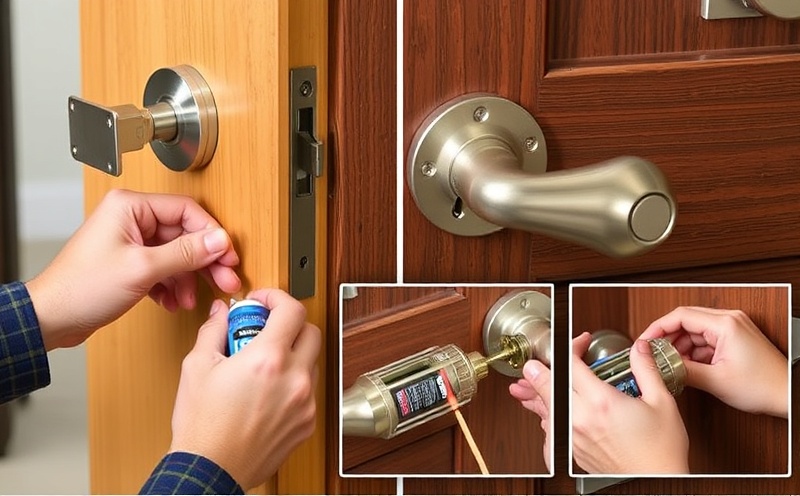
Step 2: Lubricate
- For exterior: Light silicone spray
- For interior: Graphite powder
- Apply sparingly
- Don’t oversaturate
Step 3: Work It In
- Insert key and turn several times
- This distributes lubricant
- Should feel smoother
- Wipe excess
Step 4: Test
- Lock and unlock several times
- Should operate smoothly
- If still sticking, may need professional service
Key Sticking or Breaking
Causes:
- Worn lock cylinder
- Misaligned lock
- Bent or damaged key
- Interior lock damage
Solutions:
- Don’t force key
- Try different key (rule out key problem)
- Lubricate lock
- Professional lock service if persistent
Hinge Maintenance
Types of Hinges
Ball-bearing hinges:
- High-quality, smooth
- Used on heavy doors
- Expensive but durable
Standard hinges:
- Most common
- Adequate for regular doors
- Less expensive
Spring hinges:
- Self-closing
- Used on exterior doors
- Regular maintenance needed
Hinge Care
Monthly:
- Check for squeaks
- Verify tight fasteners
- Ensure proper alignment
- Test smooth operation
When to Lubricate:
- Squeaky hinges
- Stiff operation
- Every 6 months for exterior doors
Lubrication process:
- Apply silicone spray to hinge
- Open and close door to distribute
- Wipe excess
- Repeat if needed
Tightening and Adjustment
Loose Hardware
What gets loose:
- Door hinges
- Strike plates
- Door knobs/handles
- Deadbolts
- Fasteners
Tightening process:
- Identify loose fastener
- Use appropriate screwdriver
- Tighten in quarter-turn increments
- Test function
- Don’t over-tighten (can strip threads)
Misaligned Doors
Signs:
- Door rubs on frame
- Hard to close
- Gap on one side
- Lock misses strike plate
Causes:
- Loose hinges
- Shifted frame
- House settling
- Worn components
Adjustment:
- Tighten hinge fasteners
- Check for bent hinges
- Adjust strike plate position
- May need professional help if severe
Strike Plate Maintenance
Purpose:
- Receives bolt from lock
- Prevents forced entry
- Wears with use
Maintenance:
- Keep clean and clear
- Ensure bolts engage fully
- Check screws are tight
- Adjust if misaligned
Adjustment:
- Close door and latch
- Check bolt alignment with strike plate
- Loosen strike plate screws
- Adjust position as needed
- Ensure bolt enters fully
- Tighten securely
Exterior Hardware Care
Special considerations:
- Exposed to weather
- More frequent maintenance needed
- Use stainless steel or coated hardware
- Apply weather protection
Weatherproofing:
- Use quality, weather-resistant hardware
- Apply protective coating periodically
- Remove salt spray immediately
- Replace corroded hardware
Seasonal Maintenance
Spring:
- Clean winter salt from exterior hardware
- Inspect for damage
- Lubricate hinges
- Check all locks function
Summer:
- Monitor door operation
- Watch for swelling/sticking in humidity
- Adjust strikes if needed
- Ensure security
Fall:
- Prepare for winter weather
- Weatherproof exterior hardware
- Ensure locks secure
- Test all entry points
Winter:
- Monitor salt damage
- Check operation in cold
- Lubricate if needed
- Ensure security maintained
DIY Tasks
These are safe to handle yourself:
- Tightening fasteners
- Lubricating locks and hinges
- Cleaning hardware
- Minor strike plate adjustment
Hire professionals for:
- Hinge replacement
- Lock replacement or rekeying
- Major lock damage
- Severe misalignment
Cost of Maintenance vs. Replacement
- Lubrication: Free-$5
- Fastener tightening: Free
- Hinge replacement: $20-50 per hinge
- Lock replacement: $50-200+
- Professional service: $100-300+
Prevention pays:
- Regular maintenance prevents expensive repairs
- Good security saves replacement costs
- Smooth operation extends life
Security Checkup
Annual security inspection:
- All locks operate smoothly
- Bolts engage fully
- Hinges are secure and strong
- Strike plates secure
- Door frames solid
- No broken or damaged hardware
When to Call a Professional
Professional locksmith needed for:
- Locks that don’t work despite lubrication
- Lock replacement or upgrade
- Rekeying locks
- Lock misalignment issues
- High-security lock installation
- Security assessment
- Emergency lockout services
Dealing with door lock or hardware issues? Grandmas Boys Handy Man Service handles lock and hardware repairs, adjustments, and replacements. Call today!